
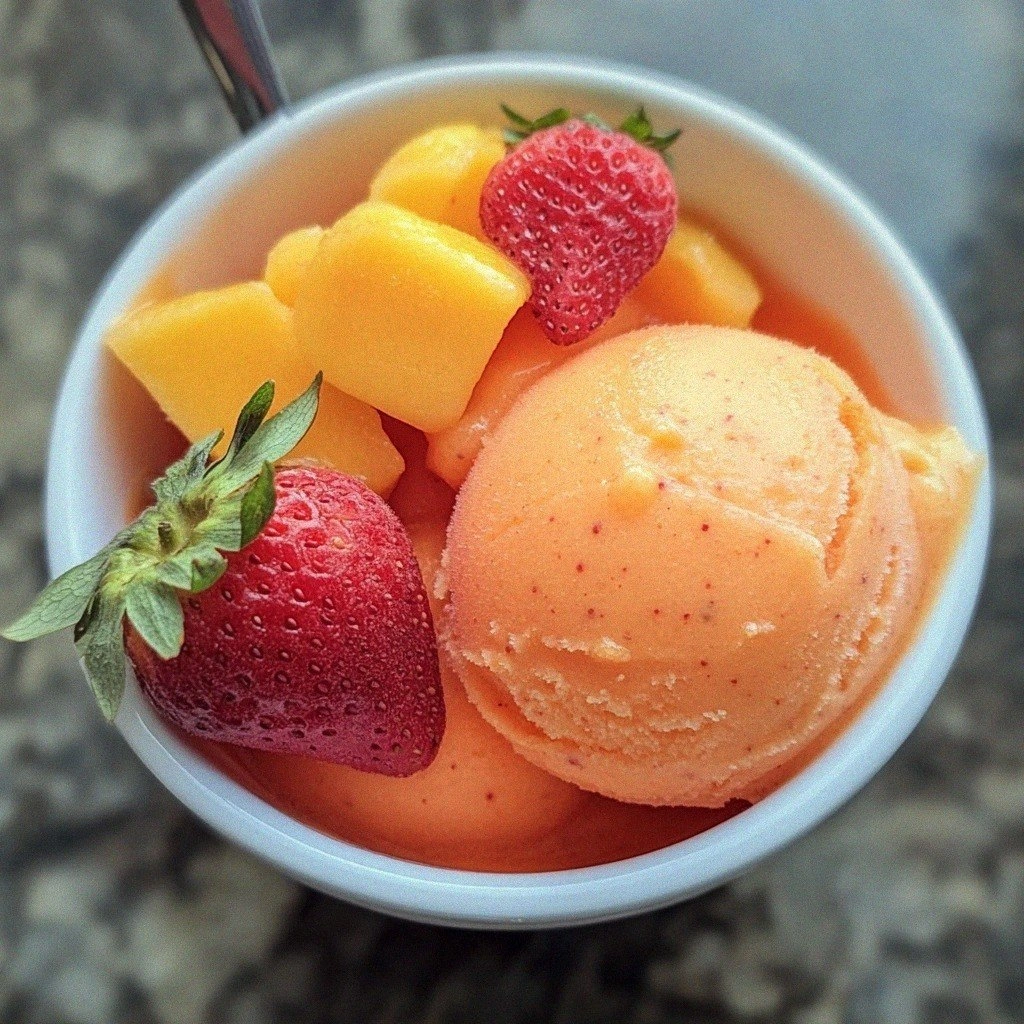
It was a sweltering July afternoon when I first discovered the magic of mango‑strawberry sorbet. I was lounging in my grandparents’ backyard, the scent of freshly cut grass mingling with the faint perfume of ripening mangoes hanging from a low‑branching tree. I remember the moment I lifted the lid of a battered metal tin, and a cloud of sweet, citrusy vapor escaped, instantly cooling my skin and waking my senses. The bright orange‑pink swirl in the tin looked like a sunrise captured in glass, and the first spoonful was a burst of sunshine that made the heat of the day feel like a distant memory. That simple, icy delight sparked a lifelong love affair with fruit‑forward desserts, and ever since, I’ve been perfecting a version that balances the tropical richness of mango with the bright, slightly tart kiss of strawberries.
What makes this sorbet stand out isn’t just the flavor—it’s the texture, the aroma, and the sheer joy of creating something that feels both elegant and approachable. When you blend ripe mangoes and fragrant strawberries with a whisper of lime, the mixture turns a velvety amber that glistens under the kitchen lights, inviting you to taste before it even hits the palate. As the sorbet freezes, tiny ice crystals form, creating a silky mouthfeel that’s smoother than most store‑bought versions, which often rely on heavy stabilizers. The secret? A simple sugar syrup that locks in moisture, preventing that dreaded icy crunch while letting the natural fruit sugars shine through.
But there’s more to this story than just a dessert. I’ve served this sorbet at birthday parties, summer barbecues, and even as a palate cleanser between courses at a dinner party where the main dish was a spicy Thai curry. Each time, guests ask, “What’s the secret?” and I smile, because the answer lies in a handful of tiny details that I’m about to reveal. Have you ever wondered why a restaurant sorbet feels so luxurious? The answer often comes down to the quality of the fruit, the balance of acidity, and the technique of freezing—things you can master at home with a few mindful steps.
Now, imagine serving a bowl of this radiant sorbet on a warm evening, the colors reflecting the twilight sky, while the faint aroma of mango and strawberry drifts through the air. The anticipation builds as you watch the spoon glide through the frozen canvas, releasing a burst of fragrant vapor that makes your mouth water before the first bite. Here’s exactly how to make it — and trust me, your family will be asking for seconds, and maybe even thirds, before the bowl is empty.
🌟 Why This Recipe Works
- Flavor Depth: The natural sweetness of mango pairs with the gentle tartness of strawberries, creating a layered taste that evolves with each spoonful. The hint of lime amplifies the fruit flavors, adding a bright, citrusy finish that prevents the sorbet from feeling cloyingly sweet.
- Texture Perfection: By using a simple sugar‑water syrup, the sorbet stays smooth and creamy, avoiding the grainy texture that can develop when sugar isn’t fully dissolved or when too much air is incorporated during freezing.
- Ease of Execution: No fancy equipment is required—just a blender, a saucepan, and a freezer-safe container. Even if you don’t own an ice cream maker, the occasional hand‑stir during the freezing process yields spectacular results.
- Time Efficiency: From start to finish, you’re looking at about 45 minutes of active work, plus a short chilling period. That’s perfect for a weekend treat when you want something impressive without spending all day in the kitchen.
- Versatility: This base sorbet can be dressed up with fresh fruit, a splash of sparkling wine, or a drizzle of coconut milk, making it adaptable for everything from a casual family dessert to an elegant dinner‑course finale.
- Nutrition Boost: Mangoes are packed with vitamin C, vitamin A, and dietary fiber, while strawberries add antioxidants and a low‑calorie sweet punch. The final product feels indulgent yet offers a modest nutritional profile.
- Ingredient Quality: The recipe shines when you use perfectly ripe mangoes and freshly harvested strawberries. Their natural sugars reduce the need for excessive added sugar, keeping the sorbet light and refreshing.
- Crowd‑Pleasing Factor: Both mango and strawberry are universally loved flavors, making this sorbet a safe bet for kids and adults alike. It’s also a great way to introduce guests to the joy of fruit‑based frozen desserts.
🥗 Ingredients Breakdown
The Foundation: Fruit & Sweetness
The two ripe mangoes are the heart of this sorbet, providing a buttery, tropical base that carries the flavor forward. Look for mangoes that give slightly to gentle pressure and have a sweet, fragrant aroma at the stem end—these are at peak ripeness. If you can’t find perfectly ripe mangoes, a quick trick is to microwave them for 20 seconds; this softens the flesh and releases more juice, though it’s best to use naturally ripened fruit whenever possible. The fresh strawberries add a pop of color and a subtle tartness that balances the mango’s richness. Choose strawberries that are deep red, firm to the touch, and free of white‑green tops, as these indicate peak flavor and sweetness.
The Sweetening Agent: Sugar Syrup
One cup of granulated sugar dissolved in half a cup of water creates a simple syrup that integrates seamlessly into the fruit puree. The syrup’s role is twofold: it sweetens the sorbet and, more importantly, it lowers the freezing point, preventing large ice crystals from forming. If you prefer a lower‑calorie version, you can substitute half the sugar with honey or agave nectar, but keep in mind that honey will add a distinct floral note that may shift the flavor profile slightly.
The Brightening Touch: Lime Juice
Two tablespoons of fresh lime juice are optional but highly recommended. The acidity cuts through the natural sweetness, sharpening the fruit flavors and adding a refreshing zing that makes the sorbet feel lighter on the palate. If you’re not a fan of lime, a splash of orange juice works as a milder alternative, though the citrus edge won’t be as pronounced. Remember to taste as you go—adding a little extra lime can turn a good sorbet into a great one.
The Secret Weapons: Texture Enhancers
While the recipe doesn’t call for any heavy stabilizers, a pinch of sea salt can heighten the fruit flavors and round out the sweetness. Additionally, a teaspoon of vodka or a light fruit‑based liqueur can improve scoopability by lowering the freezing point just enough to keep the sorbet from becoming rock‑hard. These “secret weapons” are optional but can make a noticeable difference, especially if you’re serving the sorbet in a hot climate where the freezer temperature is set very low.
With your ingredients prepped and ready, let's get cooking. Here’s where the fun really begins...

🍳 Step-by-Step Instructions
Start by preparing a simple syrup: combine one cup of sugar with half a cup of water in a small saucepan. Bring the mixture to a gentle boil over medium heat, stirring constantly until the sugar dissolves completely and the liquid becomes clear. Once the syrup is ready, remove it from the heat and let it cool to room temperature; you’ll notice a faint, sweet aroma rising from the pan, hinting at the smoothness to come.
💡 Pro Tip: To speed up cooling, place the saucepan in an ice bath, stirring occasionally. This prevents the syrup from warming the fruit later.While the syrup cools, peel and dice the mangoes into roughly one‑inch cubes. The bright orange pieces should look glossy and succulent; if they’re still a bit firm, give them a quick squeeze—they should yield slightly under pressure. Transfer the mango cubes to a blender, followed by the sliced strawberries, and blend until you achieve a completely smooth puree. The blender will whirr, and you’ll see the colors merge into a vivid, sunset‑hued liquid that smells like a tropical garden after rain.
Add the cooled simple syrup to the fruit puree, followed by the two tablespoons of fresh lime juice. Blend again briefly just to incorporate everything; you’ll hear a soft, bubbling sound as the syrup mixes with the fruit, creating a glossy, slightly viscous mixture. Taste the blend at this stage—if the sweetness feels a bit too intense, you can add a splash more lime juice or a pinch of sea salt to balance it out. Remember, the flavors will mellow slightly as the sorbet freezes, so aim for a taste that’s a touch brighter than you’d like the final product to be.
Now comes the chilling step: pour the mixture into a shallow, freezer‑safe container (a metal baking dish works wonders). Cover it loosely with plastic wrap, allowing a small vent for steam. Place the container in the freezer for about 45 minutes, then pull it out and give it a vigorous stir with a wooden spoon, scraping the edges where ice crystals may have begun to form. This “scrape‑and‑stir” technique is essential for breaking up ice crystals and ensuring a smooth texture.
⚠️ Common Mistake: Skipping the stirring step results in a grainy sorbet. Even a quick whisk can make a huge difference.Return the container to the freezer and repeat the stirring process every 30 minutes for the next 2–3 hours. Each time you stir, you’ll hear a satisfying crackle as the mixture softens, and you’ll see the color become even more vibrant. This patient, rhythmic stirring is where the magic happens; the sorbet gradually transforms from a slushy puddle into a thick, velvety consistency that holds its shape when scooped.
If you own an ice cream maker, you can skip the manual stirring and pour the chilled mixture directly into the machine, following the manufacturer’s instructions—usually about 20–25 minutes of churning. The machine’s paddle incorporates just the right amount of air, creating a light, airy texture that’s perfect for serving immediately. Whether you use the manual method or an ice cream maker, the end result will be a silky sorbet that glistens like a gemstone.
Once the sorbet reaches a soft‑serve consistency, transfer it to a clean, airtight container for final hardening. If you love a firmer texture, let it sit in the freezer for an additional 1–2 hours; otherwise, you can serve it right away for a more melt‑in‑your‑mouth experience. The aroma at this stage is intoxicating—a fragrant blend of mango, strawberry, and a faint citrus note that makes the kitchen feel like a summer market.
When you’re ready to serve, scoop the sorbet into chilled bowls or glasses. For an extra visual pop, garnish with a thin slice of mango, a whole strawberry, or a sprig of fresh mint. The contrast of the cold, glossy sorbet against the bright garnish creates a picture‑perfect dessert that’s as pleasing to the eyes as it is to the palate.
And there you have it! But before you dig in, let me share some tips that will take this from great to absolutely unforgettable...
🔐 Expert Tips for Perfect Results
The Taste Test Trick
Before you freeze the sorbet, always taste the mixture. This is the moment to adjust sweetness, acidity, or salt. If the sorbet feels too sweet, a tiny squeeze of extra lime juice can restore balance. Trust your palate—your taste buds are the best gauge for the final product.
Why Resting Time Matters More Than You Think
After blending, let the puree rest for at least 10 minutes. This short pause allows the flavors to meld and the sugar to fully dissolve, resulting in a smoother texture. I once rushed this step and ended up with a slightly icy bite; a brief rest makes all the difference.
The Seasoning Secret Pros Won’t Tell You
A pinch of flaky sea salt, added just before the final freeze, can elevate the fruit flavors dramatically. Salt acts as a flavor enhancer, reducing bitterness and highlighting the natural sweetness of mango and strawberry. I discovered this trick while watching a pastry chef on a cooking show, and it’s become a staple in my dessert arsenal.
The Ice‑Crystal Control Method
If you’re using a manual freezer method, the key is to break up ice crystals every 30 minutes. This prevents the sorbet from turning gritty. Use a sturdy spatula and a firm, swift motion—think of it as “scratching the surface of a frozen lake.” The result is a consistently silky texture that rivals any commercial product.
Serving Temperature Secrets
Serve the sorbet slightly softer than rock‑hard; let it sit at room temperature for 5 minutes before scooping. This small adjustment makes the sorbet easier to scoop and releases more aroma, enhancing the overall tasting experience. I once served a sorbet straight from the freezer, and the spoon barely moved—lesson learned!
🌈 Delicious Variations to Try
One of my favorite things about this recipe is how versatile it is. Here are some twists I've tried and loved:
Tropical Coconut Breeze
Replace the water in the simple syrup with coconut milk and add a tablespoon of toasted coconut flakes to the final mixture. The coconut adds a creamy, nutty undertone that complements the mango’s tropical notes, turning the sorbet into a mini‑vacation in a bowl.
Spicy Chili‑Strawberry Kick
Add a pinch of finely ground cayenne pepper or a few drops of chili‑infused oil to the blended fruit. The subtle heat contrasts beautifully with the sweet fruit, creating a sophisticated sweet‑heat balance that’s perfect for adventurous palates.
Mint‑Infused Refresh
Muddle a handful of fresh mint leaves in the simple syrup before heating, then strain them out. The minty aroma adds a cooling layer that makes the sorbet feel even more refreshing on a hot day.
Berry‑Boosted Version
Swap half of the strawberries for fresh raspberries or blueberries. This not only deepens the color but also introduces a slightly different tartness, enriching the overall flavor profile while keeping the base mango sweetness intact.
Adult‑Only Sparkling Sorbet
Stir in a splash of sparkling rosé or prosecco just before the final freeze. The bubbles add a light, effervescent texture that makes the sorbet feel like a celebratory cocktail, perfect for brunches or evening gatherings.
Herbal Lavender Dream
Infuse the simple syrup with dried culinary lavender buds, then strain before mixing with the fruit. The floral notes lend an elegant, perfumed finish that pairs wonderfully with the fruit’s natural sweetness.
📦 Storage & Reheating Tips
Refrigerator Storage
If you plan to enjoy the sorbet within a couple of days, keep it in an airtight container in the freezer, not the refrigerator. However, once you’ve taken it out to serve, cover the surface with a piece of parchment paper before sealing the lid. This prevents ice crystals from forming on the top and preserves the smooth texture.
Freezing Instructions
For longer storage, transfer the sorbet to a shallow metal loaf pan, press a sheet of plastic wrap directly onto the surface, and then cover with a lid. This double‑layer barrier minimizes freezer burn and keeps the sorbet fresh for up to three months. When you’re ready to serve, let it sit for 5–10 minutes at room temperature; the sorbet will soften just enough for perfect scooping.
Reheating Methods
If the sorbet becomes too hard, avoid using a microwave—this can melt it unevenly and ruin the texture. Instead, place the container in a bowl of warm (not hot) water for a few minutes, gently stirring as it softens. A splash of fresh lime juice or a drizzle of fruit puree can also revive the flavor if it has dulled over time.


